


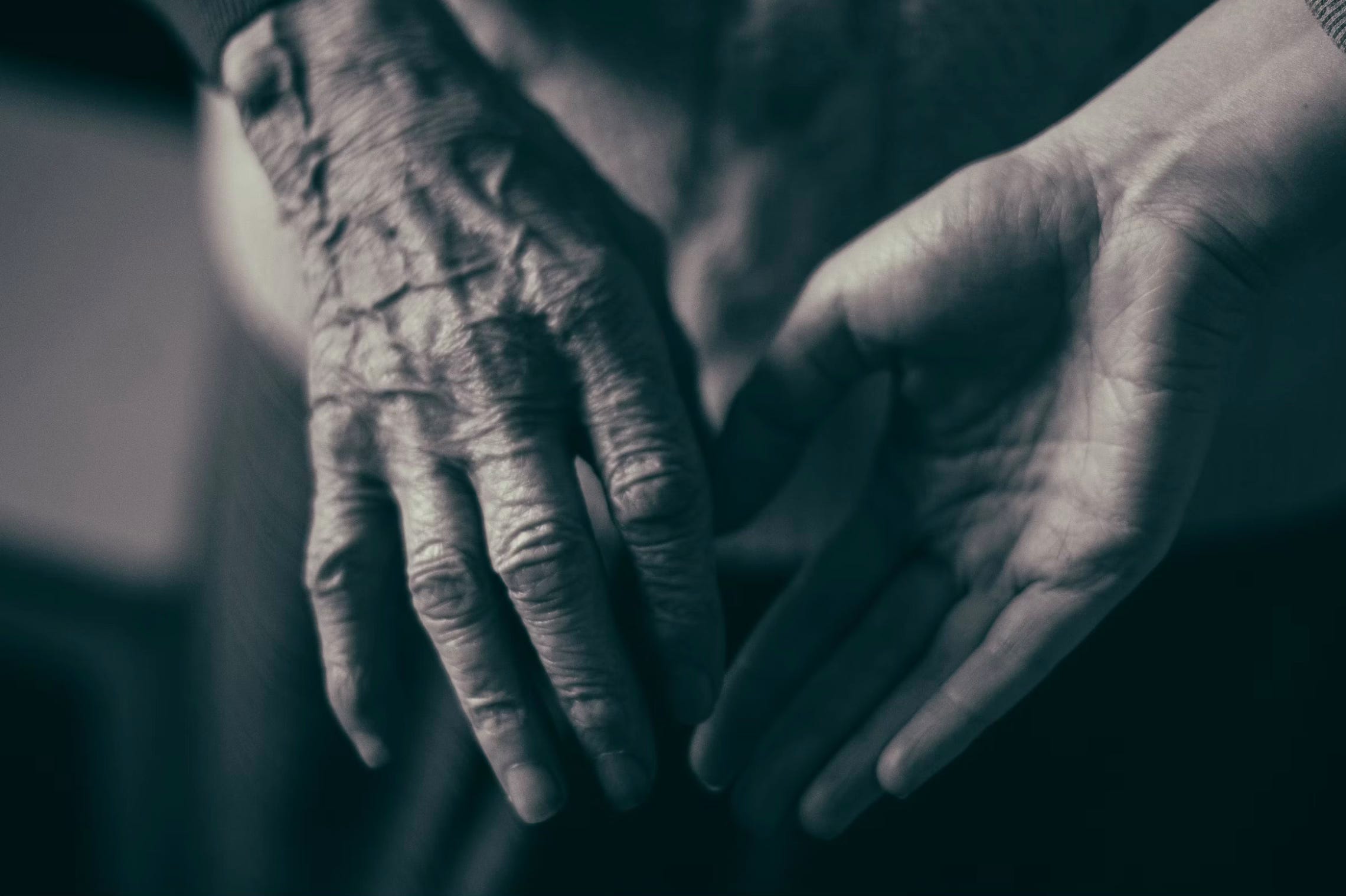
I recently read Resmaa Menakem’s My Grandmother’s Hands. It is a book about racialised trauma, history, and the way the body can keep carrying things long after the event itself has passed, sometimes long after the people involved are gone. That idea has stayed with me, as has the title. Menakem writes about his grandmother’s hands and what those hands had lived through in work, care, suffering, things she had endured and probably never had the luxury of sitting down and properly processing. There was history in those hands.
There is one sentence in the book I keep coming back to: Settled bodies settle other bodies. Unsettled bodies unsettle them. I think every person and leader should understand that. Actually, more than understand it. At some point, you have to feel the truth of it, because I think we vastly overrate words. Leadership training is full of them: how to communicate, how to have difficult conversations, how to give feedback, how to present, how to negotiate, and how to bring people with you. All are useful, but after enough time around teams, boys, dads, executives and athletes, you realise pretty quickly that people are picking up a lot more than what you’re saying. They are reading you.
Someone walks into a room, and you can usually tell pretty quickly whether they are settled or not. You may not know exactly what is wrong, but you know something is there. The jaw is tight, the shoulders are sitting higher, the eyes are moving around too much. They are answering you, but they are not really with you. You feel it. Kids are probably better at this than adults. A boy knows when his dad walks through the door after a bad day. His father doesn't need to announce that he's had a stressful afternoon. He knows. The whole house knows, really.
And I have done it myself. I have walked into a room thinking I was fine, only to realise later that everyone around me had already adjusted to whatever I was carrying. That is uncomfortable to admit, but there it is. I see this in the dojo all the time. A boy comes through the door, and sometimes, before he has said much at all, I can tell something is off. It might be school, home, something that happened in the car, a game he played badly on the weekend. It could be anything. Sometimes I ask him. Sometimes I leave it alone.
I actually think we can be too quick now to make people explain everything. Tell me how you feel. What is going on? Let’s talk about it. Maybe. But not always. Sometimes a person doesn't need another conversation. Sometimes they need to move.
One Tuesday, a father came in after a meeting that had obviously gone badly. He had barely taken his shoes off, and I could see he was still in it. His shoulders were high, his breathing was short, and his eyes kept drifting away. He was standing in front of me, but he was somewhere else. I did not ask what had happened right away. We trained.
Nothing clever. We moved, shifted weight, got down towards the ground and came back up through some DNS (Dynamic Neuromuscular Stabilisation) work. He had to pay attention to where his feet were, where I was, where his own centre was. A few minutes in, something started to change. Not some big breakthrough. His shoulders dropped a little, his breathing slowed, and his eyes came back and looked more upright. That was it. And yet it was not nothing.
The meeting was still bad. The problem had not disappeared. He still had to deal with whatever was waiting for him outside the dojo. But he was no longer completely caught inside it. That matters, because where was he going next? Probably home. Maybe another meeting. Maybe to pick up his son. And whatever he was carrying next, the people around him were going to feel some of it.
This is the part of leadership I think we have badly neglected. A leader walks into a meeting irritated, and everyone starts moving around it, usually without anyone saying a word. Someone says less, another rushes an answer, or maybe someone decides not to raise the thing they were going to raise. Someone else becomes just a little more careful. Then the leader walks out and says, “That meeting felt flat.” Maybe it was. Or maybe everyone was managing you.
At home it can be worse, because families know us too well. You can fake calm in a boardroom for half an hour. Your wife probably knows within thirty seconds. Your kids definitely do. A father can walk through the front door carrying the whole day in his body, and suddenly his family is dealing with something that happened at 11:15 that morning in an office they have never been inside.
I think men need to hear this. Not because men need to become endlessly calm, soft or measured. I do not believe that. Sometimes anger is right. Sometimes you should feel force, or something should upset you. If nothing ever gets under your skin, I am not sure that is maturity either. The question is what you do with it. Can you notice yourself tightening before everybody else has to? Can you feel your own anger without turning the whole room into an angry place? Can you be under pressure and not immediately hand that pressure to the person standing closest to you?
That is harder than it sounds, and it is different from control. Men are often very good at control. Keep it together. Get on with it. Do not show too much. I grew up around plenty of that. It has value, up to a point. But I think we confuse control with steadiness, and they are not the same thing. A man can look composed and still be completely unsettled. You can hear it in his voice sometimes. Nothing obviously wrong, just a little edge. It might be in the way he sits, or in the way everyone around him suddenly goes quiet.
That is why Menakem’s description of his grandmother’s hands keeps coming back to me. Those hands were not safe because they had somehow avoided hardship. They had not. They had worked, suffered, held people and lived through things. And still there was something in them that could settle another person.
I find that much more compelling than the version of resilience we often sell. The clean version. Adversity happened. I learnt from it, I became stronger and here are my five lessons. Life does not work like that. Sometimes suffering makes you wiser and sometimes makes you harder. You can think you have dealt with something and then ten years later it comes out of your mouth in a conversation with your son. That gets your attention.
Maturity, to me, is somewhere in there. Not becoming unaffected. I do not think that is possible. It is more about learning what to do with what affects you. Learning not to make every wound someone else’s problem. Learning how to be disappointed without becoming bitter, and how to carry pressure without spreading it everywhere. And sometimes failing at that, because you will.
Then noticing and coming back. Apologising when you need to and trying again. That is probably more of the work than we like to admit. It happens in marriages, fatherhood, teams, training, and in grief. It happens in those conversations where somebody tells you something about yourself and your first reaction is, no, that is not me. Then two days later you think about it again. Maybe it is.
Those moments have probably taught me more about leadership than most leadership material ever has. Because character is not really built while you are explaining your values. It is built when you are tired, embarrassed or angry. When nobody cares about your title. When you have to decide whether the thing you are carrying gets handed to the next person.
That is why I keep returning to Menakem’s sentence. Our state is not entirely private. We would probably like it to be. It is not. If people are around you a lot, they feel what’s going on with you. You can kid yourself that they don’t, but they do.
That is a responsibility. A fairly serious one.
Before you try to settle the room, steady yourself first.
Thanks for reading Entering the Dojo! Subscribe for free to receive new posts and support my work.
so beautifully articulated Troy, so real and true. i am walking a treadmill of various speeds of steady, watching my state as i watch my son's state. things are hard for him, it is hard to witness. i remain on the edges.
steadiness is and then when i slip forward into the future even for a second, steadiness slips. it is in those moments an intense sense of failure surfaces. awareness is exhausting. i shake my head and try again in the next second. a loop setting to ascertain my level, wait for the even and be the calm. i wonder about sustenance and decide on hope. i wonder about steadiness and presence and being present and whether calm can only come from the opportunity of each individual moment. i wonder about a lot of things.
steadiness as a value sits at the apex of everything for me. thank you for your words.