


1. THE MOMENT
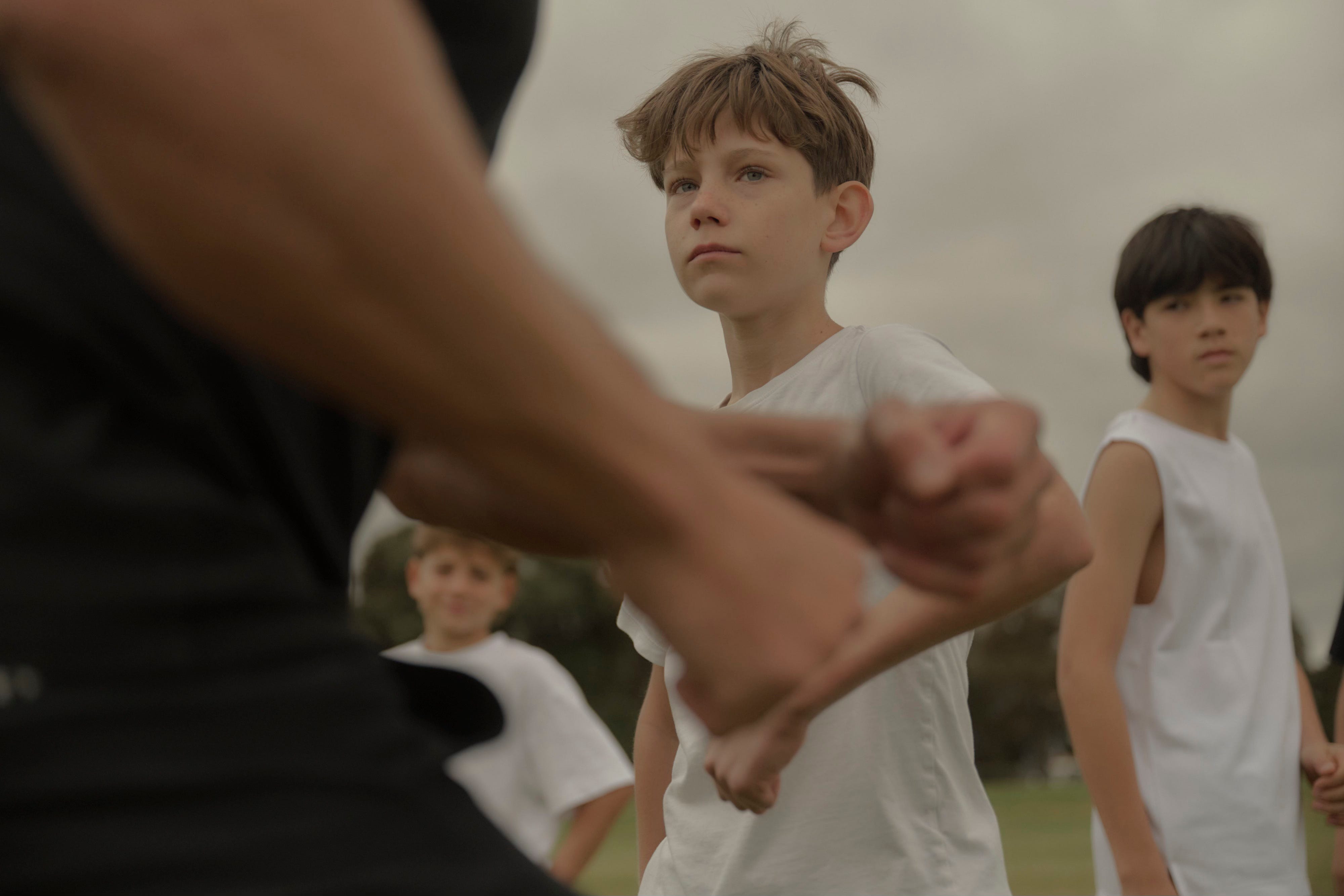
Thomas walks into the dojo while another boy is finishing his session. There is a crossover that happens often here: two boys overlapping briefly, one body of work giving way to another. Thomas does not interrupt. He sits down in seiza position near the mat and watches.
He does not announce himself. His body announces him.
When the other boy finishes, I step out of the room for something. When I come back in, Thomas is already practising his kata. Quietly. No fuss. The kind of focus you can feel in the room before you locate it in the body producing it.
From across the floor, my ridgeback pup, new to the boys, has settled into a calm without tension. She is watching him.
I say something to him about the way he is moving through the form. We stand and face each other. That is when he starts to tell me about his week.
He had been at school this week, in the library on a rainy day, in a conversation with two of his friends. The rain would ease, and the boys would be up and out the door. Then it would return and send them back in. Three times they went out. Three times the rain brought them back. His friends were restless, ants in their pants, wanting to move, wanting to be outside, anywhere but here. He told me he notices how easily we all get distracted, how quickly attention drops. If we had had our phones, he said, they would have been out.
He stayed.
He had wanted to stay in the conversation. He did not say it as defiance. He said it as a noticing. I just wanted to stay. I was enjoying the conversation.
2. THE PATTERN
A thirteen year old in a school library on a rainy day. Two friends who wanted to be anywhere but inside a conversation. The rain kept returning them to it.
His friends were not bad friends. They were just being pulled. The pull was there before any phone was. What Thomas had noticed was the pull, and his own ability to decline it.
The seiza Thomas sat in at the start of the session was not for his own work. It was for the other boys. The standard of his training requires that you pay attention to someone else’s work as it is happening. That is what Thomas had been practising in the library, with friends he could not control and a door he chose not to run for.
3. THE REFLECTION
It was not only what Thomas said. It was the way he stood as he said it. Upright. The look in his eye. He was demonstrating the thing he was describing.
I keep thinking about a different morning, weeks back. We were standing waist-deep in the bay on a calm, crisp autumn day. The water was utterly still. The sun was on our backs. We had been in easy conversation, the way you do when you are standing in water together. Then he had said, I am interested in knowing what is more out there in the world. He had not been asking me a question to answer. He had been sharing a question to sit inside. I smiled and said almost nothing. His question was the moment.
There was another group session weeks before. I had asked the group a question. Thomas had a reflection on the tip of his tongue. He held it. The other boys said what he would have said. He told me afterwards, with a kind of quiet frustration, that he should have spoken up quicker.
A couple of months before, overseas with his family, he had sat in rooms with boys he barely knew, family friends he had been pulled into without choosing. He had found it daunting at first. He had found a way into getting to know them. He told me afterwards how much he had enjoyed it, that it had not been as bad as he expected once he was in it.
He is learning to stay in conversations. He is also learning to step into them.
These are the small things that pile up. We magnify them on purpose. Most boys’ weeks happen faster than they can be noticed.
4. THE DRILL
This week, stay in one conversation longer than the pull wants you to.
Notice the moment it arrives. The small reach for the device, the impulse to move on, to go outside, to be elsewhere. You do not have to fight it. Just notice it.
Then stay.
Five minutes more than you would have. The conversation does not have to be deep. The staying is the practice.
5. THE CONVERSATION
“What do you think let you stay?”
“I think the practice. The kata. The seiza. I do it at home now. It helps me focus in conversations. I have better conversations. I am actually more present.”
The pup watched him from the floor. I did not say anything more. The practice was already saying enough.